
Gartner has published its first-ever Hype Cycle built specifically for the Chief Product Officer. That fact alone is worth pausing on. This isn’t product management folded into a broader software or IT report. It’s the CPO chair, specifically. It’s an acknowledgment that the role has changed fast enough to need its own map.
The report opens with a number worth sitting with. Only 26% of CPOs feel confident their organization is ready for the AI era. Yet the same CPOs expect 56% of their future revenue growth to come from AI products. That gap between confidence and expectation is the real subject of everything that follows.
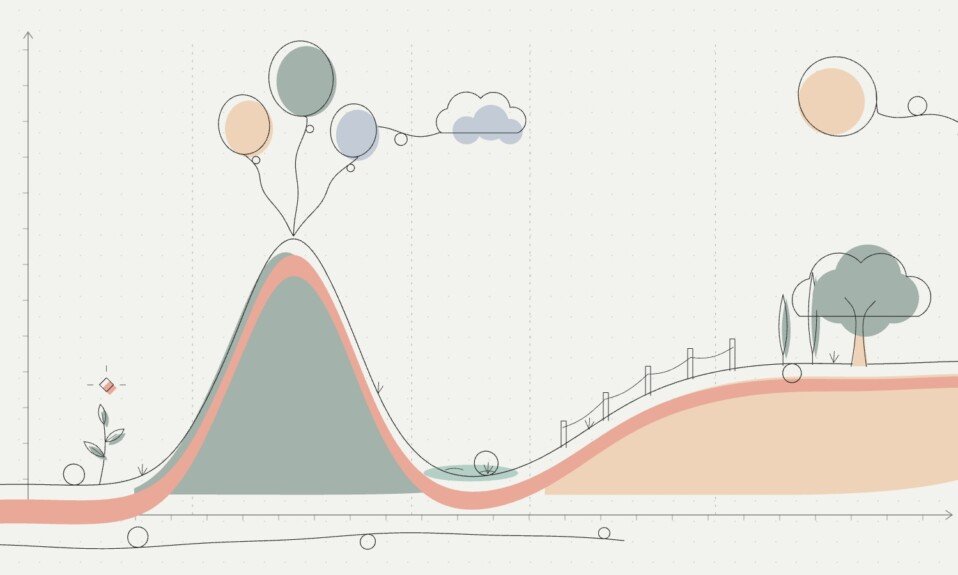
Gartner tracked 32 technologies and practices reshaping the role. It plotted them across the classic five-stage curve: Innovation Trigger, Peak of Inflated Expectations, Trough of Disillusionment, Slope of Enlightenment, Plateau of Productivity. Three tiers matter most for enterprise application leaders: what’s already table stakes, what’s earning real investment right now, and what’s still 5–10 years out.
What follows is a full breakdown of all 32 items across those three tiers. For each one, you’ll get what it is, what it means for enterprise applications, why it’s happening now, and a concrete example in practice. The highest-impact items in each tier get the full treatment. The rest appear in quick-reference tables so nothing gets lost.
Tier 1: Table Stakes for Chief Product Officer
(Plateau of Productivity / Slope of Enlightenment — mature, widely adopted, no longer differentiating on their own)
These nine practices aren’t new. What’s new is why they suddenly matter more. AI has turned each one from “nice operational hygiene” into a precondition for shipping AI features safely and profitably.
A. Product Operations
Gartner describes Product Ops as the function responsible for enablement and governance activities. In its own words, the goal is to “improve the effectiveness of the organization and accelerate the product life cycle.” The report notes this function is evolving into the team’s de facto “internal AI workflow architects.” (Benefit: High · Early mainstream · 20–50% adoption · <2 years to plateau)
What it means for an enterprise Chief Product Officer: AI tooling is multiplying inside product orgs — prototyping tools, analytics copilots, coding agents. Someone has to decide which tools to sanction and how to govern them. Someone also has to draw the line between sandbox use and production use. That’s now Product Ops’ job description, not a side project for whoever’s interested.
Why it makes sense: Product surface area keeps growing — more AI features, more integrations, more tools to evaluate. A generalist PM can’t simultaneously act as tooling gatekeeper, governance lead, and the person actually shipping product. Specialization emerges once scale outpaces generalist capacity. Product Ops absorbs the administrative and tactical layer so PMs can stay focused on strategy.
Example: Picture a Product Ops lead evaluating a new AI coding assistant. She approves it for internal tooling and prototypes but blocks it from the customer-facing codebase until it clears security review. That’s the kind of call that used to fall through the cracks between engineering and IT.
B. Consumption-Based Pricing
Consumption-based pricing charges customers for what they actually use. Gartner defines it as pricing “based on actual product usage rather than user-seat or enterprise flat-rate access entitlement models.” Vendors measure usage in compute time, tokens, or API calls, using pay-as-you-go or volume-commitment structures. (Benefit: High · Early mainstream · 20–50% adoption · <2 years to plateau)
What it means for an enterprise Chief Product Officer: Enterprise buyers now benchmark your pricing against token-based AI vendor billing, whether you like it or not. Your app may still bill per seat while its AI features quietly consume unpredictable compute underneath. That exposes your margin and makes renewal conversations harder. Pricing model redesign belongs on the product roadmap, not left to finance to patch later.
Why it makes sense: AI features carry real, variable compute costs that don’t map cleanly to a flat per-seat price. Undercharge heavy users and you bleed margin. Overcharge light users and you lose deals to a competitor who priced it right. Usage-based pricing aligns what customers pay with what you actually spend serving them. That’s why it moved from “interesting SaaS trend” to structural necessity the moment AI compute entered the cost stack.
Example: Gartner names billing and metering platforms like Zuora, Revenera, LogiSense, and Aria Systems as the infrastructure enabling this shift. Product tools like Pendo and Contentsquare now help teams tie usage metrics directly to pricing tiers.
C. Product Analytics
Product Analytics is the only Tier 1 item Gartner rates Transformational rather than High. These applications “collect and analyze behavioral data and sentiment to increase user engagement, adoption and satisfaction.” They’re now expanding to analyze AI agent interactions, not just human clicks. (Benefit: Transformational · Early mainstream · 20–50% adoption · <2 years to plateau)
What it means for an enterprise Chief Product Officer: For the first time, “analytics” has to cover whether your AI agents actually satisfy users, not just whether someone clicked a button. If you haven’t instrumented agent interactions with the same rigor as your UI funnel, you have a blind spot exactly where AI risk runs highest.
Why it makes sense: You can’t govern, improve, or defend what you can’t measure. As AI agents make more autonomous decisions inside your product, the risk of silent failure rises sharply — an agent quietly giving wrong answers for weeks before anyone notices. Instrumenting agent behavior isn’t optional polish. It’s the only way to know your AI actually works before a customer tells you it doesn’t.
Example: Platforms like Amplitude, Mixpanel, Pendo, and Gainsight already extend their event tracking to capture AI agent interactions the same way they’ve tracked human clicks for a decade. It’s the same instrumentation logic, applied to a new kind of actor inside the product.
D. Responsible AI
Gartner uses Responsible AI as an umbrella term for “making appropriate business and ethical choices when adopting AI.” That covers value, risk, trust, transparency, fairness, bias mitigation, explainability, accountability, safety, privacy, and regulatory compliance. Workers who trust their AI tools adopt them 1.4x more often. (Benefit: Transformational · Early mainstream · 20–50% adoption · <2 years to plateau)
What it means for an enterprise Chief Product Officer: Enterprise procurement now asks about your responsible AI posture the same way it used to ask about SOC 2. Show up without a documented stance and you get longer security reviews and stalled deals. Worse, you can lose the deal outright to a competitor who answers the question in one slide.
Why it makes sense: Enterprise trust cycles run on precedent. Once one major vendor has a public AI failure — a biased outcome, a hallucinated compliance answer — procurement teams everywhere start asking every vendor the same governance questions. Responsible AI stopped being a marketing checkbox the moment legal and security teams gained the power to block a deal over it.
Example: Picture a CPO publishing a plain-language AI usage disclosure: what the feature does, what data it touches, where a human reviews it. It sits alongside the SOC 2 report a customer’s security team already requests, so the review doesn’t stall on a question nobody had a ready answer for.
The rest of Tier 1, at a glance
The remaining five Tier 1 items split naturally into three groups: discovery tools, planning and growth tools, and market intelligence.
Discovery Tools
| Innovation | Description | What It Means | Why It Makes Sense | Example |
|---|---|---|---|---|
| Design Thinking | An ideation methodology — empathize/define, ideate/prototype, test — now AI-augmented at every stage. Fully mainstream, over 50% penetration. | This is table stakes for how you run discovery. The differentiator now is how well AI accelerates each stage, not whether you “do” design thinking at all. | Structured, empathy-first ideation reliably beats opinion-driven design. AI augmentation compresses cycle time without changing the underlying logic. | A two-week discovery sprint compresses to two days because AI synthesizes interview notes and drafts prototypes between sessions instead of after them. |
| Visual Collaboration Applications | Cloud-based shared canvases — Figma, Miro, Lucid, Canva — for real-time and async team creativity, now GenAI-enhanced for ideation and prototyping. | If your team isn’t using AI-assisted prototyping inside these tools yet, you’re leaving free velocity on the table. | Distributed teams need a persistent shared workspace, not another meeting. Once GenAI generates starting points inside that workspace, adoption compounds because the tool saves time instead of just organizing it. | Canva, Figma, Miro, Mural, and Lucid Software are the named vendors, and most now ship AI-assisted ideation directly inside the canvas. |
Planning & Growth Tools
| Innovation | Description | What It Means | Why It Makes Sense | Example |
|---|---|---|---|---|
| Dynamic Roadmapping | A structured “now/next/later” visualization of interdependent product and tech plans, increasingly AI-suggested. | Nearly every team already has a roadmap. The gap is whether AI helps you sequence it, or you’re still working by gut feel. | Static roadmaps break the moment priorities shift, and priorities shift constantly in an AI-disrupted market. A dynamic, interdependency-aware roadmap survives change instead of demanding a full rebuild every quarter. | Aha!, Productboard, ProductPlan, Atlassian, and Lucid Software are named vendors now surfacing AI-suggested “next best move” recommendations directly on the roadmap. |
| Product-Led Growth | A go-to-market motion centered on self-serve individual product experiences: freemium, trials, product-qualified leads. | Enterprise apps that borrow PLG motions for expansion within accounts, not just net-new acquisition, are outgrowing pure top-down sales. | Buyers increasingly want to try a product before committing to a sales cycle, especially against free AI alternatives. PLG meets that expectation directly instead of fighting it. | Amplitude, Pendo, Reprise, Arcade, and Consensus are named vendors supporting product-qualified-lead motions and interactive demos, no sales rep required. |
Market Intelligence
| Innovation | Description | What It Means | Why It Makes Sense | Example |
|---|---|---|---|---|
| Competitive & Market Intelligence Platforms | Platforms that activate insights from internal and external data to drive product, GTM, and revenue decisions. | Gartner flags this as an area where product teams remain immature — a real opening for a product leader to differentiate cheaply. | Competitive and market information now generates faster than any human team can manually track. A platform that synthesizes it becomes necessary the moment manual tracking can’t keep pace. | AlphaSense, Klue, Crayon, and Market Logic are named vendors that turn scattered competitor signals into a single feed a product team actually reads. |
Tier 2: The Active Build Zone for Chief Product Officer
(2–5 year horizon — proven enough to invest in, nowhere near default practice yet. This is where enterprise teams are actually fighting over application roadmaps in 2026.)
A. AI-Composed Applications
AI-composed applications represent the single biggest architectural bet in this tier. They use generative AI to “dynamically assemble modular business capabilities via APIs in response to free-form conversational and multimodal prompts.” This decouples the UI from back-end logic and shifts products from rigid workflows toward outcome-focused experiences. (Benefit: Transformational · Emerging · 1–5% adoption · 2–5 years)
What it means for an enterprise Chief Product Officer: Workflows may soon assemble on the fly from a prompt instead of hard-coded screens. If so, the screens you’ve spent years building your product around risk becoming a thin, replaceable layer. Only 1–5% of the market has gotten here. That’s exactly why prototyping composability now, while the field is still open, counts as a real strategic move.
Why it makes sense: Every enterprise app accumulates workflow rigidity over time — screens built for yesterday’s use case that don’t flex to today’s. GenAI can assemble the right capability on demand instead of forcing users through a fixed path. That directly solves the single biggest complaint enterprise users have about legacy software: it doesn’t do the one specific thing they need right now.
Example: A user types “show me which accounts are at risk and draft renewal outreach for the top five.” The application assembles that exact view and workflow on the spot, instead of routing them through five separate pre-built screens to get the same result.
B. Domain-Specific GenAI Models
Domain-specific models are “tailored for the needs of specific industries, business functions or workflows.” They offer better accuracy, privacy, and compliance than general-purpose LLMs, with fewer hallucinations. (Benefit: High · Adolescent · 5–20% adoption · 2–5 years)
What it means for an enterprise Chief Product Officer: Buyers in regulated industries — finance, healthcare, legal — grow more skeptical of general-purpose model answers baked into enterprise software every quarter. Partnering with or fine-tuning domain-specific models is becoming the new credibility bar for vertical enterprise applications, not a nice-to-have.
Why it makes sense: Vendors train general-purpose LLMs on the internet, not on your customer’s regulatory environment. In finance, healthcare, or law, a hallucinated answer isn’t a UX annoyance. It’s a compliance incident. The accuracy bar in regulated industries demands narrower, better-grounded training data, not broader capability — that’s exactly what domain-specific models provide.
Example: Gartner names Harvey for legal work, Kasisto for banking, Spellbook for contracts, and Vic.ai for accounting. Each vendor fine-tunes a model on exactly one domain’s data and terminology instead of trying to be useful everywhere at once.
C. Vibe Coding
Vibe coding uses natural language prompts to drive AI in building software, skipping the code and underlying complexity entirely. Gartner calls it currently “high-risk… derided for enterprise use,” yet “highly effective for rapid prototyping and boosting personal productivity.” (Benefit: Transformational · Adolescent · 5–20% adoption · <2 years)
What it means for an enterprise Chief Product Officer: This is a governance landmine as much as a productivity win. Every enterprise app CPO needs an explicit written policy: sandbox and prototyping, yes; customer-facing production, no, unless it runs through full SDLC rigor. Without that policy in writing, engineers are already doing this quietly, and that’s the actual risk.
Why it makes sense: The gap between describing what you want and building it has been software’s biggest bottleneck for decades. Closing that gap for prototyping is an obvious win. The reason it’s stuck in the Trough is just as obvious. Closing the same gap for production code also removes the review and testing discipline that keeps enterprise software reliable. The win and the risk come from the exact same mechanism.
Example: An engineer spins up a working internal demo overnight using tools like Lovable, Bolt, or OpenAI Codex. These are the same tools Gartner lists under rapid prototyping, and the engineer uses them to test an idea with stakeholders the next morning. A written policy keeps that output out of anything a customer touches until it clears full SDLC review.
D. Forward Deployed Engineer (FDE)
An Forward Deployed Engineer is “a business and technical specialist embedded directly in a customer or value stream.” This person accelerates AI and platform adoption by combining engineering, domain knowledge, and product expertise. (Benefit: High · Adolescent · 1–5% adoption · 2–5 years. Sample vendors: Deloitte, Google, Microsoft, OpenAI, Palantir)
What it means for an enterprise Chief Product Officer: Palantir popularized the FDE model. It’s becoming the standard way AI vendors close the gap between an impressive demo and something that actually works against a customer’s messy real-world data. Does your enterprise app’s AI depend on working correctly inside a customer’s environment? Then expect FDEs — or an internal equivalent — to become a real headcount line on your budget, not a support-team afterthought.
Why it makes sense: AI models perform beautifully on clean demo data and unpredictably against a customer’s actual systems. Someone has to sit inside that gap and make the model work against reality instead of a slide. The difference between an AI pilot and an AI deployment is almost always data and integration reality, not model quality. That’s exactly the gap FDEs fill.
Example: Gartner names Palantir, Google, Microsoft, OpenAI, and Deloitte as vendors running this playbook. Each embeds technical specialists directly inside customer teams rather than routing everything through a support ticket queue.
The rest of Tier 2, at a glance
The remaining ten Tier 2 items split into five natural pairs, from prototyping tools through to automation.
Prototyping & Cloud Infrastructure
| Innovation | Description | What It Means | Why It Makes Sense | Example |
|---|---|---|---|---|
| AI-Assisted Tools for Rapid Prototyping | These tools prototype directly from customer input, producing a working, executable demo in near real time. | They shorten the feedback loop from weeks to days, but only if PMs actually change how they run discovery to use them. | Feedback on a static spec is guesswork. Feedback on a working prototype is real signal, and once AI generates that prototype in hours, there’s no good reason to keep validating ideas the slow way. | Named vendors include Anthropic, Anysphere, Bolt, Lovable, Figma, and OpenAI Codex — tools that turn a customer conversation into a clickable demo the same day. |
| Sovereign Cloud | This is cloud infrastructure that keeps data, apps, and operations immune from external jurisdictional control. | It’s already showing up in more RFPs as a hard requirement, not a differentiator. Treat it as compliance infrastructure. | Data-residency law and geopolitical tension aren’t slowing down. Enterprises operating across borders need infrastructure that survives a jurisdiction dispute — a compliance requirement, not a preference. | A European customer requires proof that data and AI processing never leave EU jurisdiction, verifiable under the EU AI Act, before the vendor conversation even starts. |
Consistency & Literacy
| Innovation | Description | What It Means | Why It Makes Sense | Example |
|---|---|---|---|---|
| AI Product Behavioral Determinism | This discipline enforces AI outcomes that stay consistent, reliable, predictable, and repeatable despite AI’s inherently probabilistic nature. | It’s the discipline that keeps your AI feature from giving three different answers to the same customer question three times in a row. | Enterprise customers won’t tolerate an AI feature giving different answers to the same question twice. Determinism makes probabilistic AI usable in contexts that require consistency, like billing or compliance. | A billing support agent gives the identical refund-eligibility answer every time, no matter how the customer phrases the question. |
| AI Literacy for Product Teams | This is the role-based ability to use AI effectively and responsibly in a business context. | Gartner puts it bluntly: “investing in AI without literacy is throwing money away.” Budget for training, not just tools. | A tool is only as good as the judgment of the person using it. Teams without AI literacy either underuse powerful tools or overtrust flawed outputs, and both failure modes get expensive fast. | Named training vendors include IBM, Pluralsight, Skillsoft, DataCamp, and Accenture’s Udacity, offering role-based AI curricula instead of one generic company-wide workshop. |
Attribution & Knowledge Governance
| Innovation | Description | What It Means | Why It Makes Sense | Example |
|---|---|---|---|---|
| AI Product Attribution & Transparency | This discipline enforces traceability of every AI-generated output back to its data sources, policies, and reasoning steps. | It goes beyond explainable AI into product defensibility — the difference between “our AI said so” and “here’s exactly why.” | When an AI feature makes a consequential decision, “the model said so” won’t satisfy a customer, auditor, or regulator. Someone will eventually ask why, and you need a real answer. | An AI-generated pricing recommendation ships with a visible trail: which data it pulled, which policy it applied, which steps led to the number. |
| AI Product Knowledge Governance | This discipline secures and validates the information assets used to ground your AI, preventing “context poisoning.” | Bad grounding data produces outputs that are technically correct but business-incorrect — brand-damaging in an enterprise context. | An AI system is only as trustworthy as the knowledge grounding it. Bad or stale source data produces confidently wrong answers, and governance is the only defense before that reaches a customer. | A support AI trained on last year’s pricing PDF confidently quotes a discount that expired six months ago — exactly the failure this discipline exists to catch first. |
Process Visibility & Simulated Data
| Innovation | Description | What It Means | Why It Makes Sense | Example |
|---|---|---|---|---|
| Embedded Process Intelligence | This is native integration of process mining, modeling, and monitoring directly into enterprise software. | It’s built-in visibility your customers will start expecting rather than bolting on separately. | Bolt-on monitoring tools always lag the process they monitor. Building visibility directly into the platform closes that lag and makes monitoring the default, not an add-on purchase. | An ERP flags an invoice-approval bottleneck in real time from its own event logs, instead of relying on a separate process-mining tool bolted on months later. |
| Hyper-Synthetic Data | This is simulation-generated data modeling “what could happen,” overcoming real-data bias, scarcity, and privacy limits. | It lets you train and test AI features on scenarios your real production data doesn’t have enough examples of yet. | Real production data is biased toward what already happened, and it’s often too sensitive to use freely. Synthetic data modeling “what could happen” fills gaps real data structurally can’t. | Named vendors include Synthesis AI, Aindo, Anyverse, and SKY ENGINE AI, generating simulated scenarios too rare or too sensitive to pull from real customer data. |
New Monetization & Automation
| Innovation | Description | What It Means | Why It Makes Sense | Example |
|---|---|---|---|---|
| New Business Models via APIs and MCP | The Model Context Protocol opens direct monetization and partner channels through API portals and gateways. | Most CPOs haven’t priced this in yet — an underpriced opportunity for a new revenue line. | Once an AI agent can discover and call your capabilities directly through a protocol like MCP, charging for that access is the obvious next step, the same way you’d charge a human user. | Named vendors include Stripe, Salesforce, Adobe, Anthropic, and OpenAI — early movers exposing metered, agent-callable capability through MCP gateways. |
| Autonomous PM Agents | These are AI agents that handle PM decisions and actions without human assistance. | They suit late-maturity, declining products best today, freeing human PMs for early-lifecycle, creative work. | Late-stage, low-growth products need maintenance-style decisions more than creative ones. Those decisions are repetitive enough for an agent to make reliably, freeing human PMs for products that still need judgment. | An agent monitors a mature, low-growth product line and autonomously deprecates an unused feature flag, while the human PM stays focused on the early-stage product still shaped by live user feedback. |
Tier 3: The Future Bets for Chief Product Officer
(5–10+ year horizon, Innovation Trigger stage — worth watching and piloting, not worth betting the current roadmap on.)
Micro Product Teams
A micro product team is “an AI-native software engineering team comprising a AI product manager, product designer and product engineer.” It’s talent-dense, empowered, autonomous, and fully accountable for its product’s success. (Benefit: Transformational · Embryonic · <1% adoption · 5–10 years)
What it means for an enterprise Chief Product Officer: If this plays out, today’s 15–20 person feature squads shrink to 3-person pods producing comparable output, because AI absorbs the execution grunt work. It’s years out, but the org-design experiments worth watching are happening now. The org chart of 2032 may look nothing like today’s.
Why it makes sense: If AI absorbs execution work — writing code, generating variants, running tests — the coordination overhead of a 15-person team stops paying for itself. Smaller, more autonomous teams cut the handoffs and meetings that scale with headcount. The logic follows directly from AI doing more of the “many hands” work teams used to need people for.
Example: Picture a 3-person pod — one PM, one designer, one engineer. They ship and fully own a feature end-to-end, with AI handling the bulk of implementation, in place of a 15-person squad split across sprint ceremonies.
Multiagent Ecosystem Management
Gartner defines this as “the product-led discipline of governing autonomous agent swarms.” It’s the strategic governance layer covering brand safety, cost, and cross-agent logic — exactly what orchestration tooling alone doesn’t cover. Gartner’s own framing sums it up: “Siloed agents are the technical debt of the agentic era.” (Benefit: Transformational · Emerging · <1% adoption · 5–10 years)
What it means for an enterprise Chief Product Officer: Enterprise apps keep embedding more agents — support agents, workflow agents, data agents, often from different vendors. Someone has to own what happens when they interact unpredictably. Almost nobody owns this today. It will become a real job title before the decade is out.
Why it makes sense: The moment you have more than one AI agent operating in or around your product, their behaviors can conflict. One optimizes for speed, another for cost, a third for accuracy — none aware of the others. Someone has to own the rules for how they coexist, the same way someone owns API contracts between services today. Agent density hasn’t hit the threshold where conflicts become visible yet, but it will.
Example: A support agent, a billing agent, and a scheduling agent inside the same enterprise app all pull from one customer record. This discipline decides which agent has final say when their recommendations conflict, instead of leaving it to whichever one runs last.
Autonomous Product Innovation
This is an AI-powered approach that “transforms products into dynamic, self-evolving systems capable of continuous self-improvement with minimal human intervention.” It decouples revenue growth from headcount growth. Some startups already claim $1 million ARR per employee this way. (Benefit: Transformational · Emerging · 1–5% adoption · 5–10 years)
What it means for an enterprise Chief Product Officer: This is the line in the whole report most worth sitting with, because it directly threatens the assumption that product improvement requires proportional headcount growth. It’s a long horizon, but it earns a real pilot budget, not just a slide in next year’s strategy deck.
Why it makes sense: If a system can observe how it’s used and improve itself based on that signal, the traditional cycle collapses. PM notices a problem, writes a spec, engineering builds it, and it ships months later — that cycle gets far faster. The $1M-ARR-per-employee examples already appearing show what happens once that human-mediated cycle stops being the bottleneck.
Example: Early AI-native startups already cite roughly $1 million in ARR per employee. That ratio is unheard of in traditional enterprise software, where growing revenue has historically meant growing headcount at close to the same rate.
The rest of Tier 3, at a glance
The remaining six Tier 3 items split into three pairs: interface bets, simulation and industry bets, and people and pricing bets and what they mean for a Chief Product Officer.
Interface Bets
| Innovation | Description | What It Means | Why It Makes Sense | Example |
|---|---|---|---|---|
| Zero-UI | Screen-based interfaces shrink or disappear, replaced by voice, gesture, context, and behavioral interaction. | Enterprise apps typically lag consumer software on UI shifts. Expect early pilots in narrow workflows — data entry, reporting — well before broad adoption. | Every additional screen or click is friction. If an agent can just do the task from a voice or context cue, removing the screen entirely is the logical end state of reducing friction, not a novelty. | An expense report files itself when an employee says “submit my Uber receipts from this week.” No form ever opens. |
| Industry Cloud Platforms | These whole-product compositions of SaaS, PaaS, and IaaS deliver industry-specific outcomes. | By 2030, Gartner expects over 80% of enterprises to use industry-specific AI agents, up from under 10% today — a big compounding bet. | Generic cloud infrastructure forces you to build industry-specific logic yourself, every time. A platform already composed for your industry removes redundant work every buyer in that vertical would otherwise duplicate. | Named vendors include Veeva for life sciences, Siemens, SAP, ServiceNow, and the major hyperscalers. Veeva in particular built its whole platform around one industry’s compliance needs. |
Simulation Bets
| Innovation | Description | What It Means | Why It Makes Sense | Example |
|---|---|---|---|---|
| SimOps | Simulation and feedback let machines simulate, execute, and adapt composable solutions while humans set intentions. | It helps you navigate deglobalization and tech sovereignty — relevant if your enterprise footprint spans multiple regulatory regimes. | Supply chains, regulations, and markets now shift faster than teams can plan for manually. Simulating outcomes before committing resources gets cheaper than trial-and-error in the real world. | A CPO simulates three different supply-chain configurations against a new tariff regime before committing engineering resources to build any single one. |
| Behavioral Science for CPOs | This applies psychology, neuroscience, and economics to understand user motivation and resistance to change. | Companies applying behavioral science outperform peers by 85% in sales growth and 25%+ in gross margin, per the cited research — a long-horizon differentiator, not a quick win. | Adoption failures are usually psychological, not technical. Users resist change for reasons a feature list doesn’t address, and behavioral science gives product leaders a real framework for why users do what they do. | A product team A/B tests default opt-in versus opt-out for a new AI feature and measures the adoption lift that comes purely from the framing, not the feature itself. |
People & Pricing Bets
| Innovation | Description | What It Means | Why It Makes Sense | Example |
|---|---|---|---|---|
| Human Insights Platforms | These platforms use AI to accelerate, not replace, user research: recruitment, interviews, usability testing. | They speed up research cycles without removing the human judgment that makes qualitative research valuable in the first place. | AI can speed up the mechanics of research — scheduling, transcription, synthesis — without replacing a skilled researcher’s judgment. The platforms that succeed speed up the boring parts and leave the thinking to humans. | Named vendors include UserTesting, Dovetail, Dscout, Maze, and Looppanel, accelerating recruitment and synthesis while a human researcher still designs the study and interprets the findings. |
| Outcome-Based Pricing | This ties pricing directly to the business results a customer receives, not usage or seats. | It’s the single longest-horizon, lowest-benefit item on the entire chart — over 10 years — because it means absorbing attribution risk no vendor has fully solved yet. | Customers want to pay for results, not effort. But proving a business outcome came from your software rather than other factors is a genuinely hard attribution problem, which is exactly why this sits furthest out on the chart. | A vendor promises to charge only when their AI reduces a customer’s support ticket volume, then hits the wall of proving the drop wasn’t just a seasonal dip. |
Practical Tips for AI Product Managers and Rising Product Leaders
Reading the curve is one thing. Acting on it is another. Here’s what each of the 32 items actually asks of you, split by role.
For AI Product Managers
- Instrument every AI agent interaction the same way you instrument clicks. Silent failure is the real risk.
- Write your vibe-coding policy today. Sandbox and prototypes get a yes. Customer-facing production gets a no, unless it clears full SDLC.
- Learn the difference between explainability and attribution. Enterprise buyers will ask for both.
- Push for a literacy budget before a bigger tools budget. A powerful tool in untrained hands backfires fast.
- Pick two or three Tier 2 bets, not all fourteen. Depth beats breadth here.
- Treat pricing as a product decision, not a finance afterthought. Consumption-based models belong on your roadmap.
- Ask “what real constraint does this solve?” before adopting anything new. It’s the fastest way to filter hype from substance.
For Aspiring Chief Product Officer and Product Leaders
- Sponsor Product Ops as a real function. Don’t leave it as a side hustle for whichever generalist PM has time.
- Get fluent in AI governance. Procurement now asks about it the way it used to ask about SOC 2.
- Practice negotiating the boundary between product, engineering, and marketing. That boundary keeps moving in the AI era.
- Don’t let the 26%-versus-56% confidence gap become your org’s gap. Build real AI readiness before you promise AI revenue.
- Champion moving people up the value chain instead of just automating them out. Judgment and strategy are becoming the real differentiators.
- Read every future Hype Cycle with the same filter: what constraint does each new item actually solve?
The Bottom Line
One theme repeats across all three tiers more than any other. The differentiator was never whether the AI works. It’s whether you can prove, govern, and explain what it just did on your customer’s behalf. Every item in the active build zone that touches attribution, governance, or determinism exists for the same reason: enterprise buyers are done taking AI outputs on faith.
Move People Up the Value Chain
Don’t confuse automation with elimination. The CPOs who come out ahead are moving their people up the value chain — into judgment, strategy, and the exceptions machines still can’t handle. AI absorbs everything repeatable underneath them instead.
The Filter for Judging What Comes Next
A third theme ties the “why it makes sense” thread together across all 32 items. Almost nothing here happened because a vendor decided to invent a trend. Each item is a direct, traceable response to a real constraint. A cost stopped scaling linearly. Enterprise buyers stopped ignoring a trust gap. AI removed a bottleneck that used to require headcount. That’s a useful filter for judging the next Hype Cycle too. Ask what constraint a new item actually solves before deciding whether it deserves budget.
Download the Gartner Hype Cycle for Chief Product Officer, 2026 here