
Systems thinking is now the defining skill for modern product managers.
Systems thinking is fast becoming the defining skill of the modern product manager. The idea itself is not new; Donella Meadows and Peter Senge made the case decades ago. What is new is the price of ignoring it, now that AI agents act inside our products.
Picture a team that ships an invoice auto-approval agent. The brief is simple: raise the touchless rate. Within weeks, the metric climbs and the team celebrates.
A quarter or two later, the picture sours. Exception queues downstream swell. Suppliers learn which invoice patterns sail through. Analysts quietly build spreadsheet workarounds because they no longer trust the queue. Each effect is small, yet together they erode most of the gain.
The feature was fine. The thinking was linear.
Nothing in that feature is badly built. The flaw is conceptual: the team optimised one variable and ignored the web of loops around it. Anyone who has run agentic products in production will recognise some version of this pattern.
It is also the root of a conviction I hold firmly. The product managers who matter most over the next five years will not be the fastest feature shippers. They will be system thinkers: people who see feedback loops, delays and second-order effects before they ship, not after. This post argues that the inflection point has already passed, explains why agents in particular raise the stakes, and sets out how to build the muscle deliberately.
Four Eras That Led to Systems Thinking in Product Management
Product management has reinvented itself several times, and each reinvention raised the altitude at which a PM is expected to think. The dates below are approximate; they mark when each idea became mainstream, not when it was born.
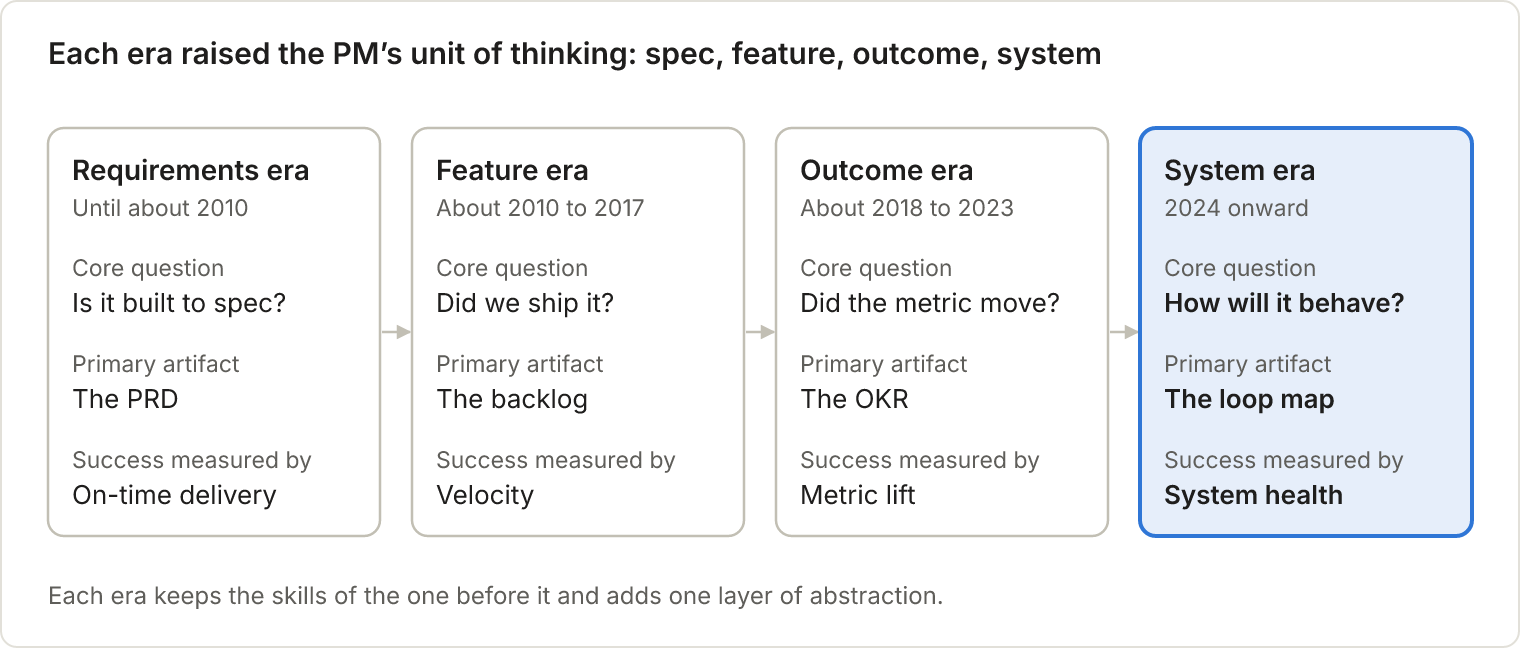
Requirements, features and outcomes
In the requirements era, the PM was essentially a scribe. We wrote exhaustive specifications, handed them to engineering and measured ourselves by on-time delivery. Competence meant precision.
The feature era arrived with agile. Sprints shortened the distance between idea and release, so velocity became the currency. A good PM kept the backlog groomed and the release train moving.
Then came the outcome era. Influenced by growth teams and OKRs, we stopped asking whether we shipped and started asking whether the metric moved. This was a genuine maturation, because it tied product work to business value.
Why the system era is different
The system era began quietly around 2024. Its catalyst was not a methodology but a technology. AI agents stopped being features inside products and became actors within them. They decide, act and interact with one another, often without a human in the loop.
None of these eras discarded the skills of the one before. Precision, velocity and outcome focus all still matter. What each era did was add a layer of abstraction, and today that layer is the system itself: the interplay of humans, agents, data, incentives and time. Systems thinking is therefore no longer an elegant extra. It is the new baseline.
The Inflection Point for Product Managers
For two decades, implementation was the scarce resource. Engineering capacity was finite, so the PM’s most valuable act was choosing what to build. Prioritisation was our principal lever.
That scarcity has largely evaporated. AI coding assistants, agentic frameworks and low-code tooling have collapsed the cost of turning an idea into working software. A prototype that once took a sprint can now take an afternoon.
What changed is the ratio
Wrong system decisions were always expensive; that part is not new. What changed is their cost relative to building. When a feature took a quarter, a flawed design also spread slowly, and its damage accrued at human speed. Today the feature is cheap, while an agent may execute a flawed policy thousands of times a day.
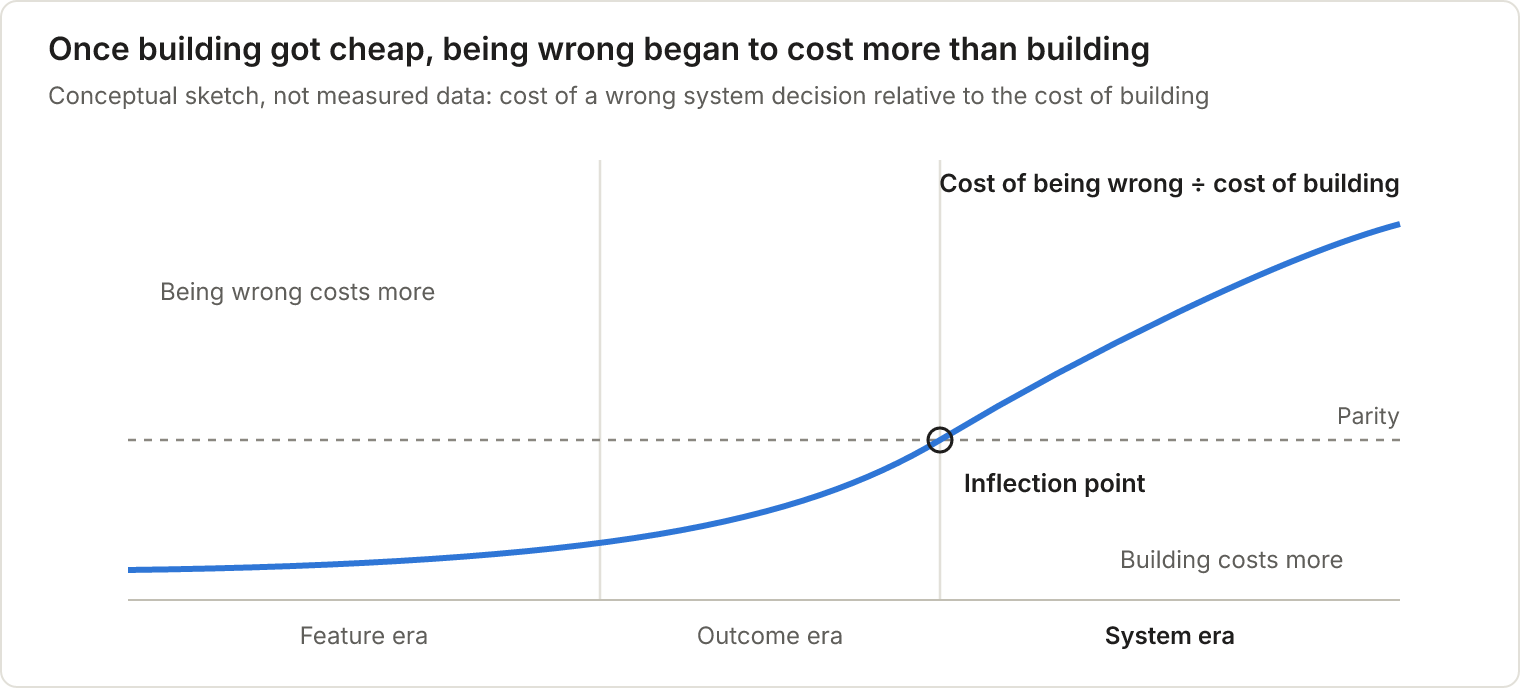
That inversion is the inflection point. Before it, the bottleneck was capacity. After it, the bottleneck is comprehension: understanding how parts interact, where delays hide and which loops will compound. The scarce skill is no longer deciding what to build, but anticipating how the whole will behave.
Where systems thinking changes the PM’s week
The shift is already visible in how strong PMs spend their time. Specification and backlog grooming are shrinking, largely because agents now draft much of that material. A different category of work is expanding instead: designing policies, guardrails, autonomy thresholds and feedback mechanisms.
The implication is uncomfortable but unavoidable. A PM anchored in feature delivery will find that work increasingly automated. A PM fluent in systems thinking will find their leverage multiplying, because every decision now propagates further.
Thinking in Loops, Not Lists
Most senior PMs already know the vocabulary of systems thinking: stocks and flows, reinforcing and balancing loops, delays and leverage points. Anyone who wants a refresher will find none better than Donella Meadows’ essay on leverage points. The hard part is not the vocabulary. It is applying it before a launch rather than in the post-mortem.
The same feature, seen two ways
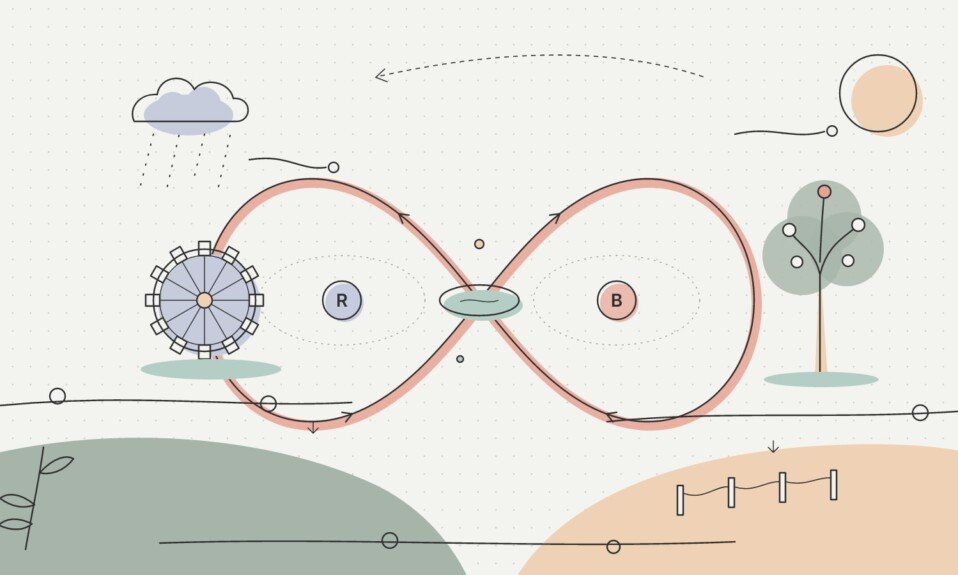
Consider the auto-approval agent again. A linear thinker sees a tidy chain from shipment to success. By contrast, a system thinker sees two competing loops operating at different speeds.
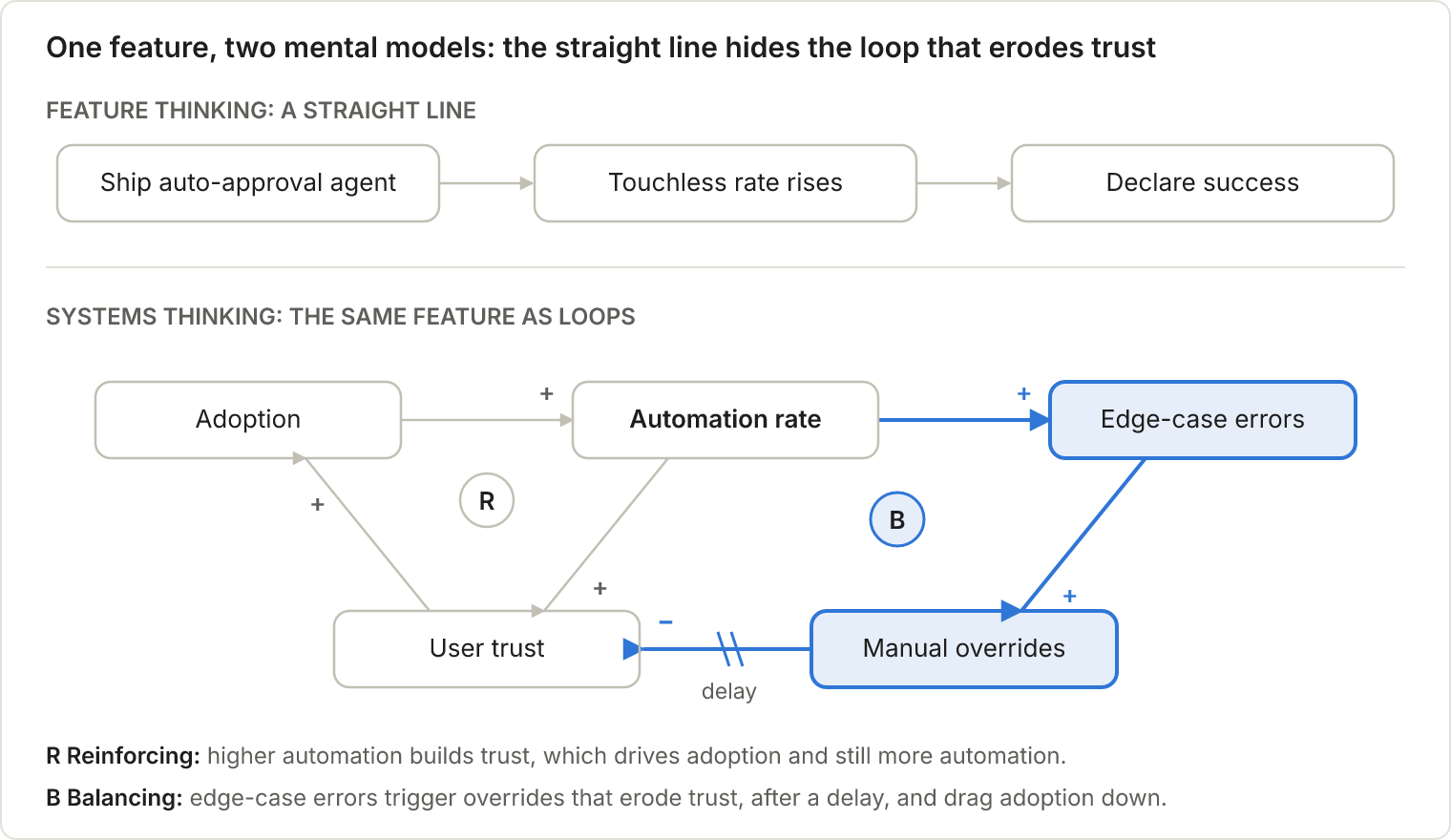
The reinforcing loop acts quickly, so early dashboards look splendid. The balancing loop, however, acts slowly. By the time overrides visibly erode trust, the team has already moved on. That temporal asymmetry is precisely why linear thinkers are so often blindsided.
The systems thinking habit that matters most
If I could instil one habit in every PM, it would be this: ask “and then what?” three times before you ship. The first answer is usually the intended effect. The second reveals the adaptation by users, suppliers or agents. The third surfaces the consequence nobody planned for, which is invariably the one that matters.
Why Systems Thinking Is No Longer Optional
Three converging forces have turned systems thinking from a virtue into a necessity. Each one, on its own, would raise the stakes. Together, they make linear product management untenable.
1. Agents are actors, not features. An agent does not merely display information; it makes decisions. When several agents interact, emergent behaviour follows. No single requirement describes it, yet the PM is accountable for it.
2. Products have become platforms. Shared data layers, ecosystem integrations and consumption-based pricing tie every module to every other. Consequently, a change in one corner ripples outward, sometimes into the invoice your customer receives.
3. Your own product can game your metrics. An AI system optimising a KPI will find the shortest path to it, including paths you never intended. This is Goodhart’s law operating at machine speed.
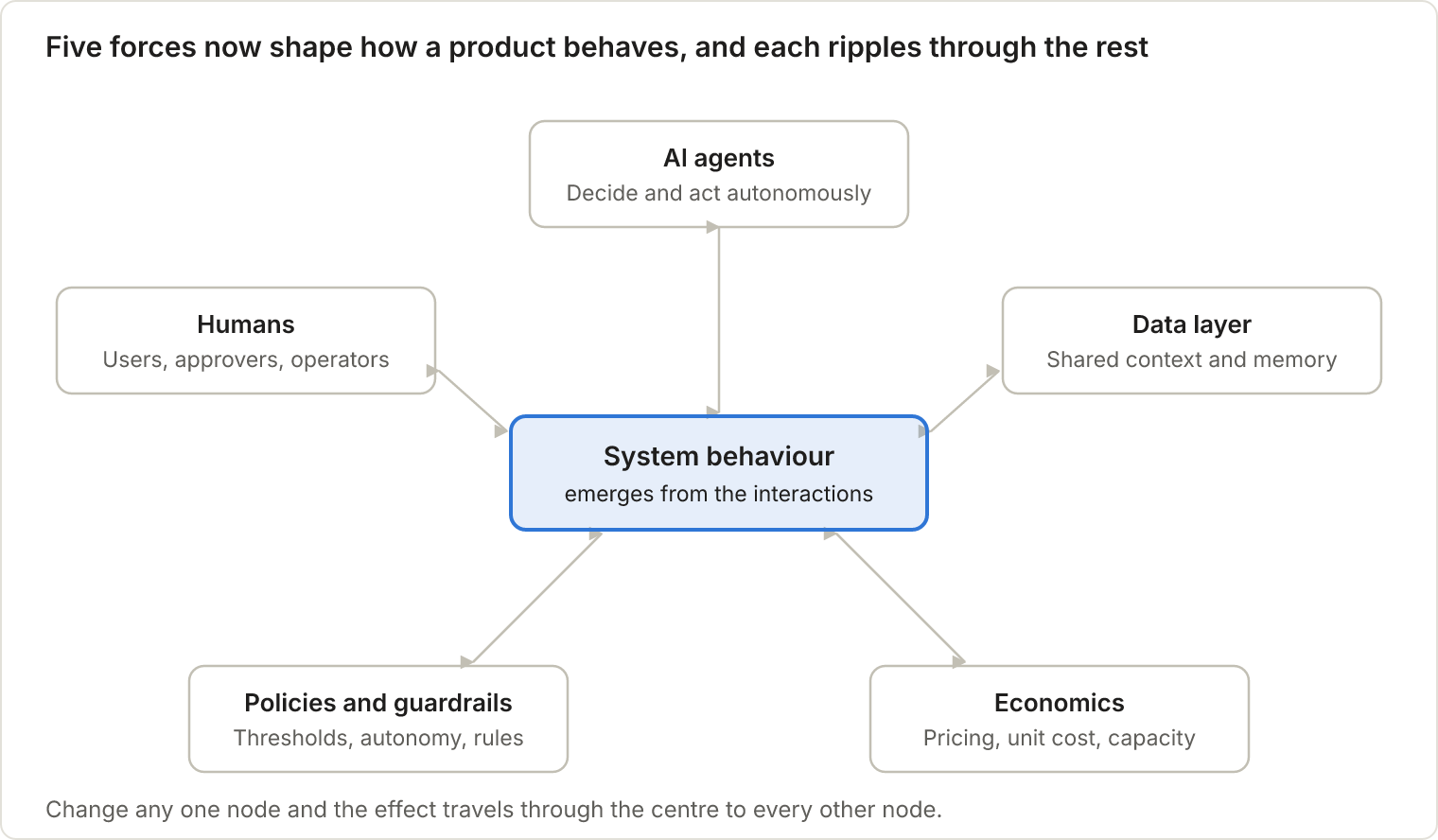
The unit of design has changed
Taken together, these forces redefine what a PM actually designs. We no longer design screens or even journeys in isolation. Rather, we design the conditions under which humans, agents, data, policies and economics interact. The product is the behaviour that emerges from those interactions.
Why agents change the arithmetic of error
Of the three forces, agents deserve the closest scrutiny. They alter the arithmetic of error in four distinct ways.
- Scale. A human approver who misreads a policy makes a handful of mistakes a day. An agent with the same misreading repeats it on every matching transaction.
- Speed. Agents act continuously, so a flaw compounds overnight rather than over a quarter.
- Interaction. Agents increasingly hand work to other agents. Two individually sensible policies can combine into behaviour that neither designer foresaw.
- Drift. Models, data and upstream systems shift beneath a deployed agent. Yesterday’s safe threshold can quietly become today’s liability.
None of these risks appears in a feature specification. Every one of them appears in a loop map. That asymmetry, more than any other, is why systems thinking has become the PM’s core discipline in the agentic era.
Five Competencies of the Systems Thinking PM
After years of hiring and coaching product managers, I have distilled the system-era skill set into five competencies. None of them replaces the fundamentals. Instead, each one sits on top of them.
1. Loop mapping
The system PM draws the causal structure before writing the PRD. A rough loop diagram on a whiteboard exposes more risk than a forty-page specification. It also forces a candid conversation about what the product will actually incentivise.
2. Counter-metric design
Every success metric deserves a guardrail that would expose its dark side. If you track touchless rate, also track override rate. If you track agent throughput, also track reversal rate. A metric without a counterweight is an invitation to self-deception.
3. Policy over features
Increasingly, the most consequential PM output is not a screen but a rule. Autonomy thresholds, escalation criteria and approval limits shape behaviour far more than interface polish. Therefore, the system PM treats policy as a first-class product surface.
4. Time-horizon reasoning
The system PM separates week-one effects from quarter-three effects. Many features look triumphant in the short run and corrosive in the long run, or the reverse. Holding both horizons in mind simultaneously is a discipline, not an instinct.
5. Economic awareness
In the agentic world, every inference has a cost. Consumption pricing, token spend and platform capacity are now system variables. A PM who ignores unit economics can ship a beloved feature that quietly erodes gross margin.
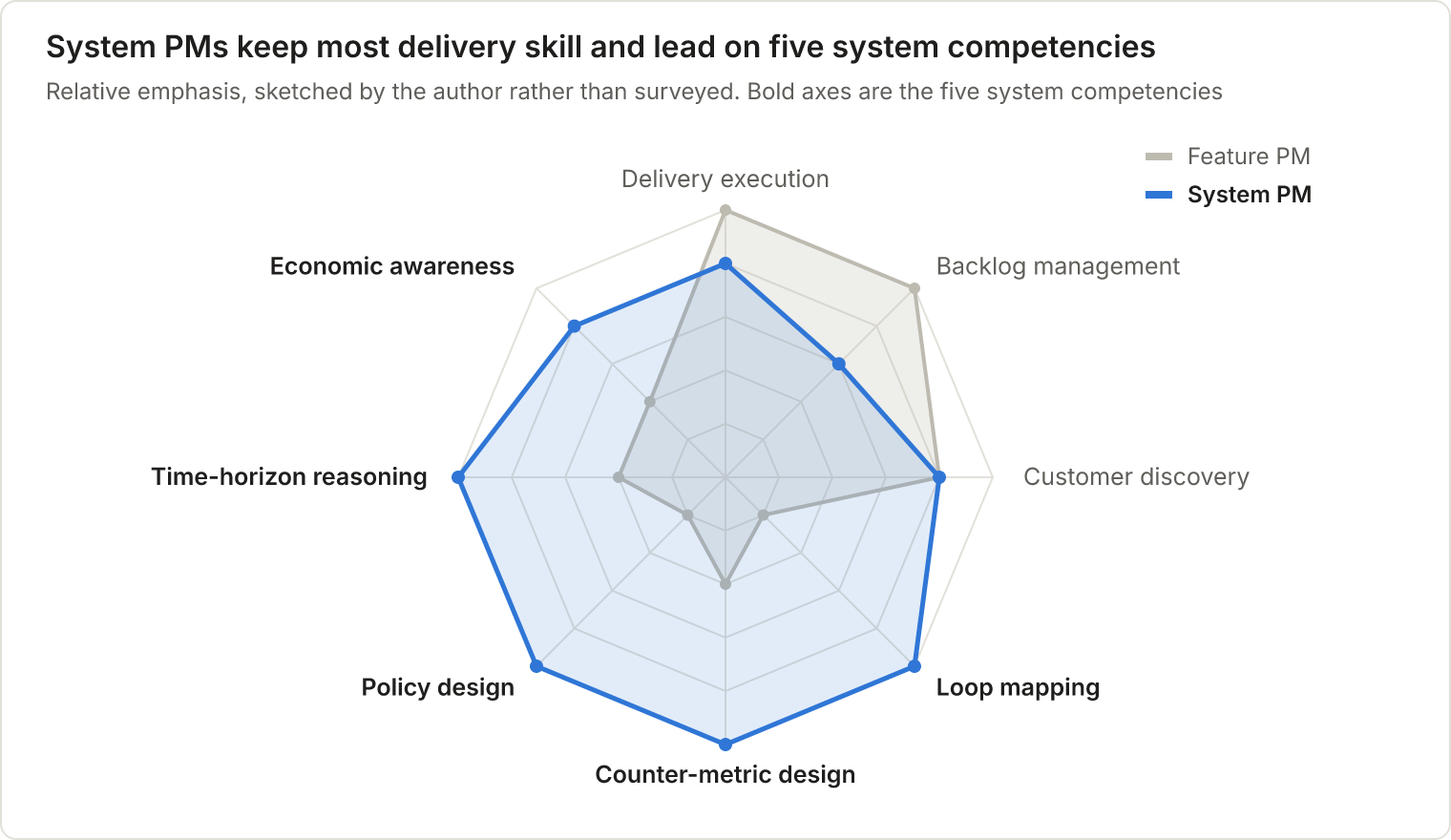
Notably, the system PM does not abandon delivery or discovery. The profile simply shifts. Execution skills remain solid, while the five system competencies move from peripheral to central.
Building the Muscle: Four Rituals
Systems thinking is a muscle, and muscles grow through repetition. Exhortation alone achieves little. Rituals work better than preaching. Here are four I would put in place on any product team.
Four rituals that make systems thinking stick
- No loop map, no green light. Every significant product review should open with a causal loop diagram. It need not be elegant. It must, however, show at least one balancing loop.
- Second-order pre-mortems. Before launch, imagine the feature succeeded spectacularly, then ask what broke. Paradoxically, imagined success surfaces more risk than imagined failure.
- Metric trees with mandatory guardrails. No driver metric enters a dashboard without a paired counter-metric. The pairing is reviewed as rigorously as the target itself.
- Quarterly system health reviews. Alongside the roadmap review, examine drift: rising override rates, creeping costs and slowly decaying trust signals.
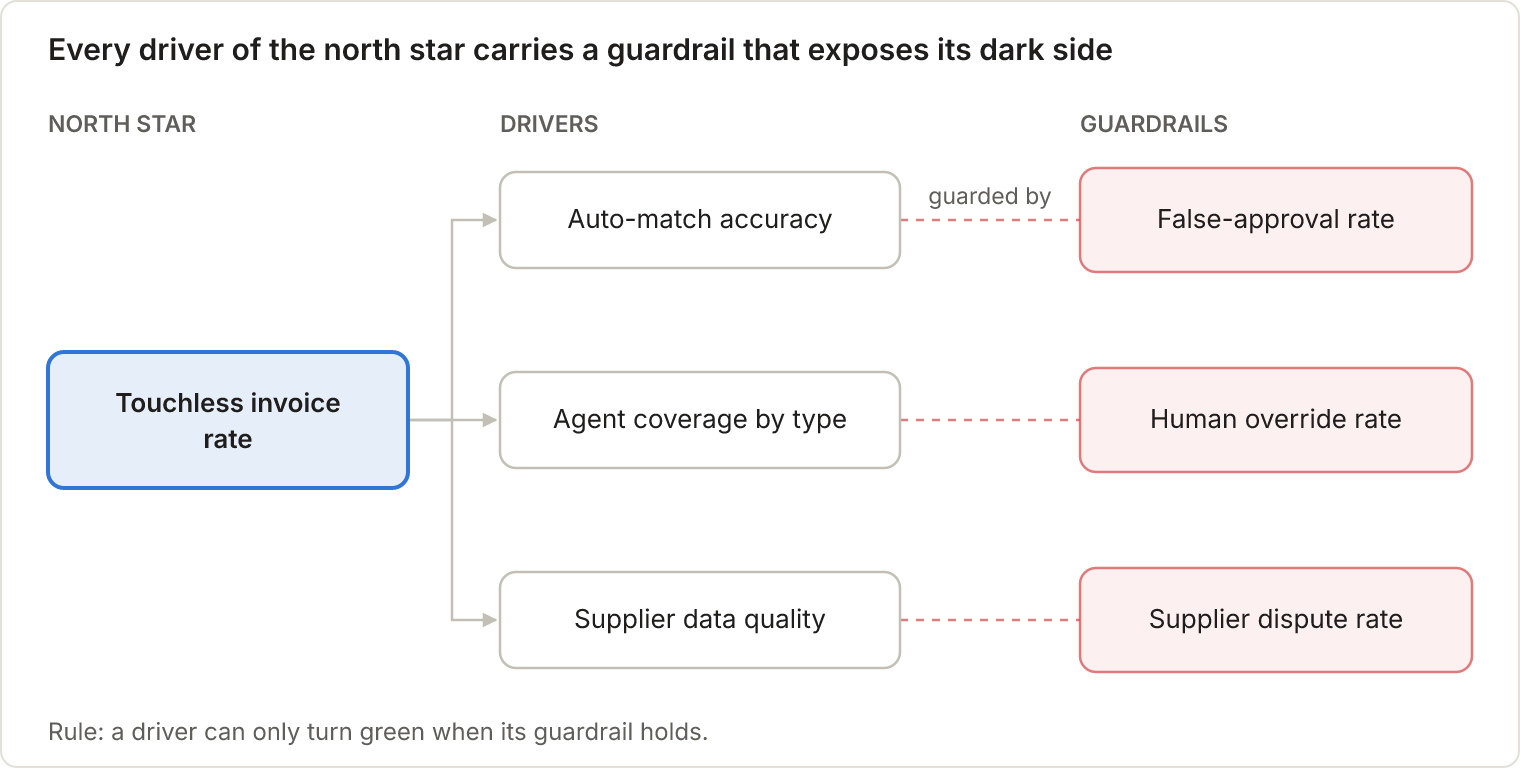
Start small with systems thinking
You do not need a reorganisation to begin. Pick one live feature and draw its loops this week. Then add a single guardrail metric. Within a quarter, the habit compounds, because each loop map makes the next one faster. I have explored related ideas on agentic product design in other essays on SAQUIBJ.com.
What This Means for Hiring and Careers for Product Managers
As someone who hires and develops product managers, I believe we need to rethink how we hire and promote. The old interview prompt, “design a feature for X”, now reveals very little. A better prompt hands candidates a messy system and asks them to find the loop that will fail first. Strong candidates tend to sketch before they speak.
Career ladders need the same recalibration. Most frameworks still reward feature ownership and outcome delivery. Few explicitly reward systems thinking: the ability to design and govern systems.
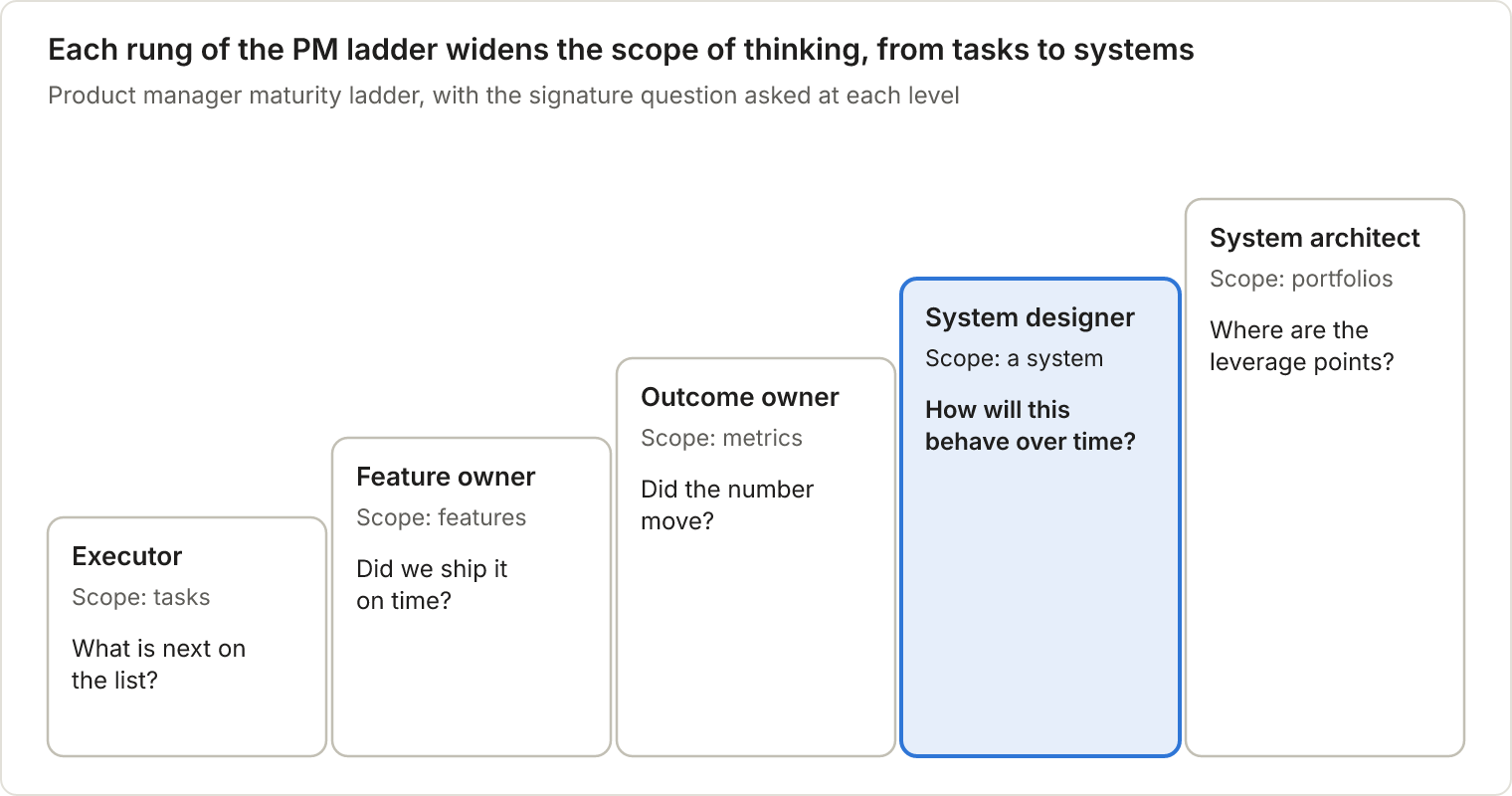
The System designer rung is where I expect demand to concentrate. PMs who reach it early will find their careers accelerating, while those who plateau at outcome ownership may find the ground shifting beneath them.
Conclusion: Systems Thinking Is the New Product Edge
The rise of the system thinker is not a passing fashion. It is the logical consequence of cheap building, autonomous agents and deeply interconnected platforms. In short, the inflection point has already passed.
For product managers, the choice is stark but liberating. We can keep optimising features in isolation and watch that work become automated. Or we can embrace systems thinking and become the people who design how intelligent products behave.
The best PMs of the next decade will not be judged by what they shipped. They will be judged by what the system did after they shipped it.
Over to you: what is one loop in your product that your dashboards cannot see? Sketch it, share it in the comments, and tell me which force, from scale, speed, interaction or drift, worries you most.